
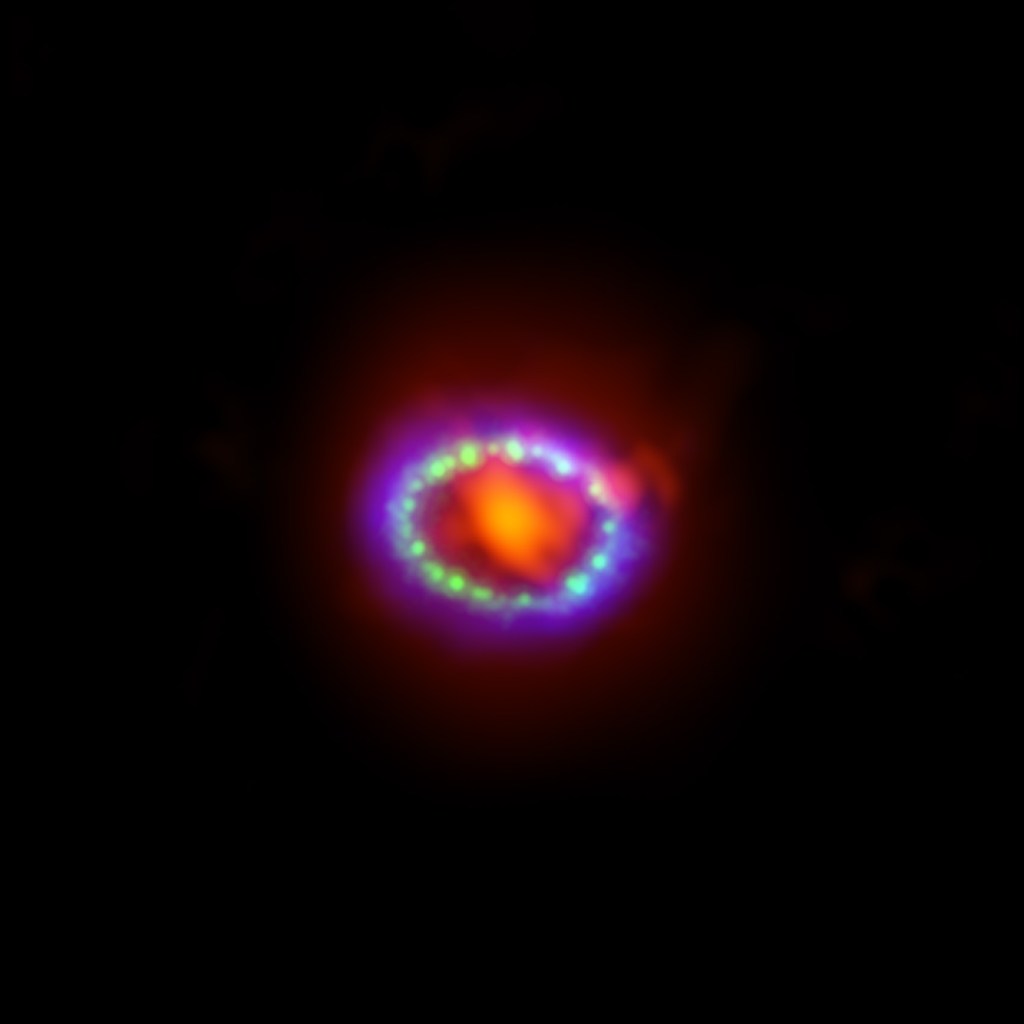
- Scientists have introduced the “SETI Ellipsoid” strategy, leveraging significant cosmic events like supernova 1987A as a potential cue for extraterrestrial civilizations to send synchronized signals, utilizing data from the TESS and Gaia missions for target selection.
- Despite analyzing the light curves of 32 targeted stars within the TESS continuous viewing zone for anomalies, the study found no evidence of technosignatures, underscoring the challenges in detecting signals from extraterrestrial technology.
- This research signifies a novel approach in the search for intelligent life beyond Earth, emphasizing the importance of expanding SETI efforts beyond traditional radio wave searches to include optical wavelengths and other potential signal types.
In a new and novel approach to the search for extraterrestrial intelligence (SETI), scientists have developed the “SETI Ellipsoid” strategy, which aims to detect signals from alien civilizations by focusing on technosignatures that may have been broadcast in synchronization with notable galactic events, such as supernova 1987A. This innovative method leverages the concept of a Schelling point, a recognized strategy for coordination without communication, suggesting that extraterrestrial civilizations might use significant cosmic occurrences as cues to send signals, assuming others would be watching these events too.
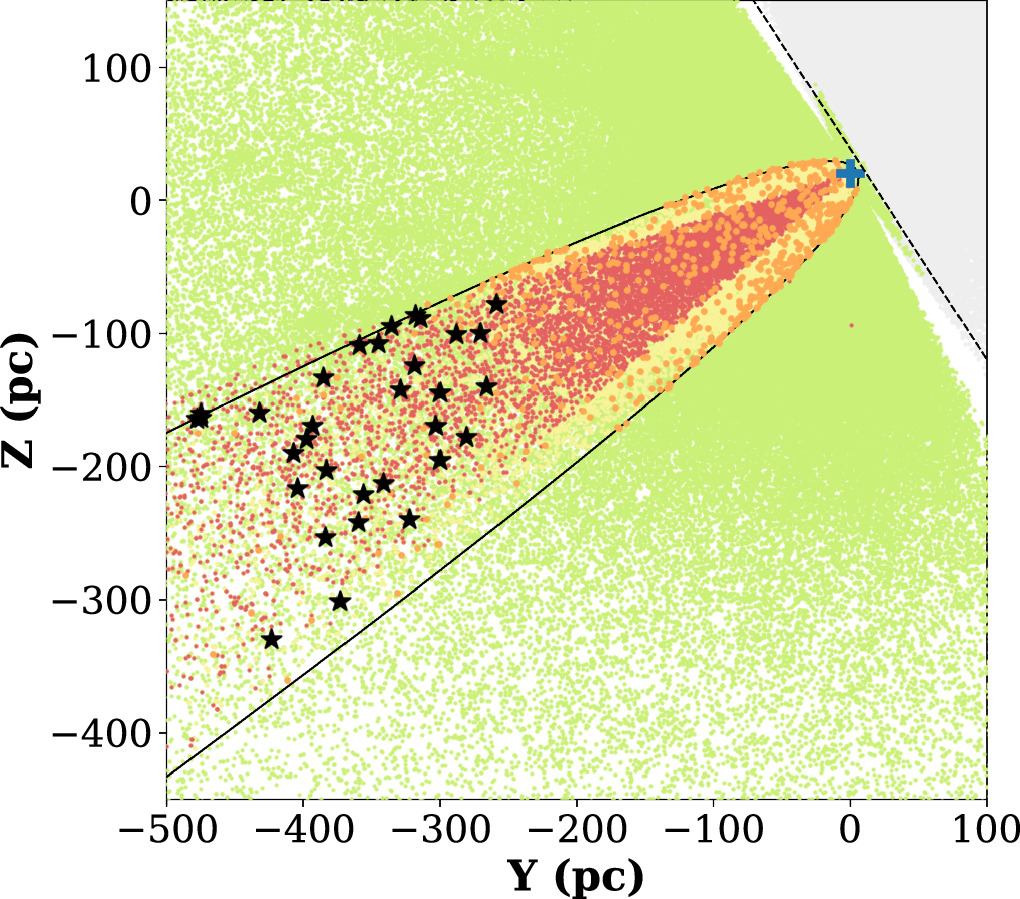
The research utilized data from the Transiting Exoplanet Survey Satellite (TESS) and the Gaia Early Data Release 3 to pinpoint 32 targets within the TESS continuous viewing zone, which comprises 5% of all TESS data observed during the first three years of its mission. Despite the thorough examination of TESS light curves for these stars, no anomalous signatures indicative of extraterrestrial technology were found. However, the methodology opens up new avenues for SETI research beyond traditional radio wave searches, incorporating optical wavelengths and other signal types into the quest for intelligent life beyond Earth.
The SETI Ellipsoid model focuses on identifying signals that might be intentionally directed at Earth, using the timing and location of a supernova as a beacon. This approach is part of a broader effort to refine search strategies in the era of big data, where sky surveys like TESS and the upcoming Vera Rubin Observatory are expected to generate vast quantities of observational data nightly. The challenge lies in sifting through this data to identify potential technosignatures amid the noise—a task that requires innovative approaches like the SETI Ellipsoid and sophisticated data analysis techniques.
While the search did not yield direct evidence of extraterrestrial civilizations this time, it marks a significant step forward in the SETI field, demonstrating the potential of using large-scale astronomical surveys to hunt for technosignatures. Future work will focus on refining these methods, exploring additional targets, and possibly incorporating artificial intelligence to enhance the detection of potential signals from other intelligent beings in the cosmos.
Source: Cabrales, Bárbara, et al. “Searching the SN 1987A SETI Ellipsoid with TESS.” The Astronomical Journal, vol. 167, no. 3, 2024, p. 101, dx.doi.org/10.3847/15383881/ad2064, https://doi.org/10.3847/15383881/ad2064.
Featured Image: SN 1987A. ALMA (ESO/NAOJ/NRAO)/A. Angelich. Visible light image: the NASA/ESA Hubble Space Telescope. X-Ray image: The NASA Chandra X-Ray Observatory



 ad*astra daily