
Recent scientific research has deepened our understanding involving isotopes found in deep ocean sediments, potentially solving a cosmic mystery dating back millions of years. Scientists have detected the presence of live isotopes, specifically 60Fe and 244Pu, in sediments that are 3 to 4 million years old. These findings challenge previous notions about the origins of these elements, traditionally linked to core-collapse supernovae and rare cosmic events such as binary neutron star mergers.
Historically, 60Fe has been associated with supernovae, while 244Pu is thought to be a product of r-process nucleosynthesis, a cosmic phenomenon believed to occur in rare events like neutron star mergers, otherwise known as a kilonova. The ratios of these isotopes found on Earth have puzzled scientists, as they could not be fully explained by existing models of cosmic events.
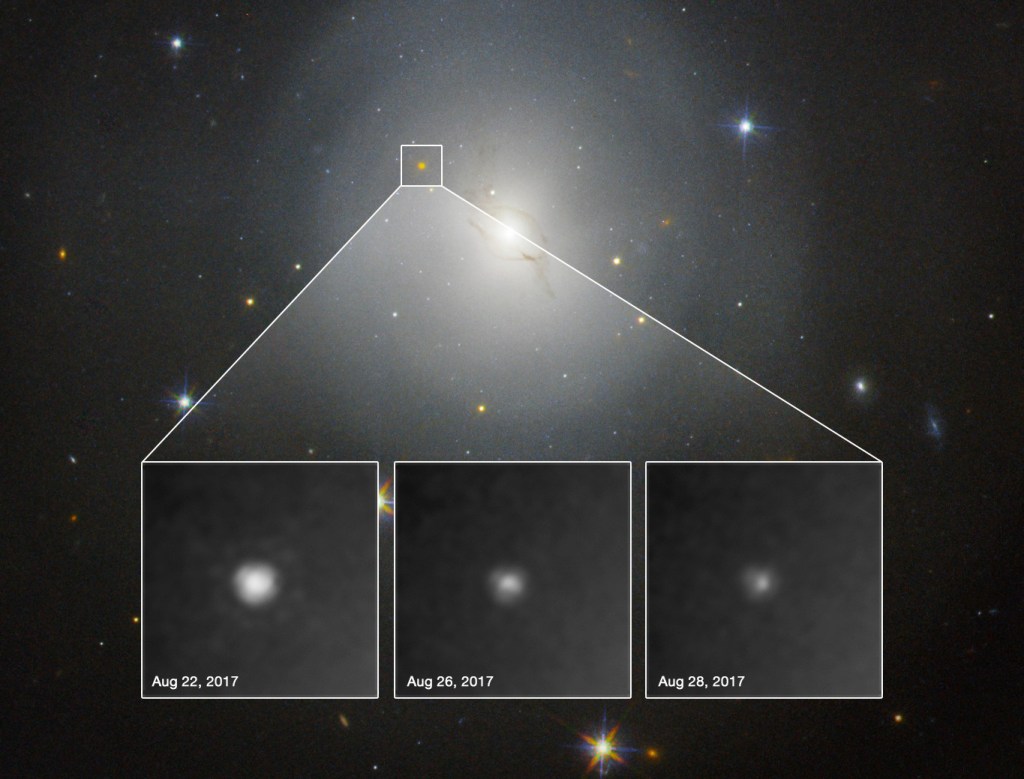
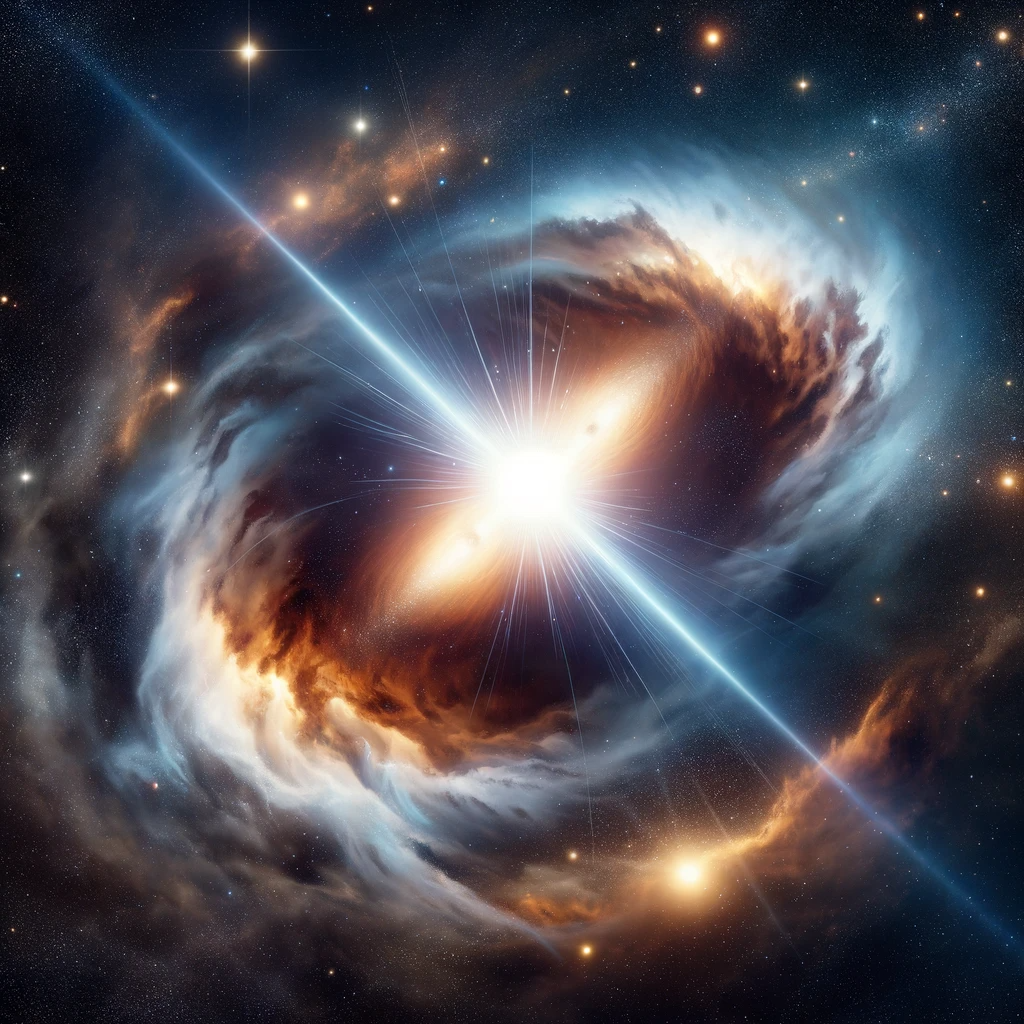
Kilonova are a cosmic phenomenon that occurs as a result of the collision and merger of two neutron stars, or a neutron star and a black hole. This event is characterized by a short-lived burst of light that is approximately 1,000 times brighter than a classical nova, hence the name “kilonova.”
The first observation of a kilonova associated with gravitational waves (GW170817) was made in August 2017. This landmark discovery confirmed the theory that neutron star mergers are a key site for the production of heavy elements in the universe and opened a new era of multi-messenger astronomy, where gravitational wave observations are combined with electromagnetic observations to study cosmic events.
In a new development, researchers have utilized advanced numerical simulations to study these binary neutron star mergers, considering scenarios where these cosmic collisions could expel heavy elements. The simulations suggest that the isotopic signatures observed in Earth’s sediments could indeed be the result of a binary neutron star merger that occurred approximately 80 to 150 parsecs away, between 3.5 and 4.5 million years ago.
The event, producing a long-lived massive remnant, challenges previous assumptions and indicates that binary neutron star mergers can account for the presence of these isotopes on Earth. The study also highlights the complex nature of cosmic nucleosynthesis and the need for further experimental and observational efforts to understand these processes fully.
This latest research opens up exciting new avenues for understanding the production of heavy elements in the universe, emphasizing the significance of binary neutron star mergers in cosmic element formation. This discovery not only sheds light on the origins of certain isotopes found on Earth but also contributes to our understanding of the cosmic events that influence our solar system and beyond.
Source: Chiesa, Leonardo, et al. “Did a Kilonova Set off in Our Galactic Backyard 3.5 Myr Ago?” The Astrophysical Journal Letters, vol. 962, no. 2, 2024, p. L24, dx.doi.org/10.3847/20418213/ad236e, https://doi.org/10.3847/20418213/ad236e.
Featured Image: Kilonova observed within NGC 4993, NASA and ESA. Acknowledgment: N. Tanvir (U. Leicester), A. Levan (U. Warwick), and A. Fruchter and O. Fox (STScI)
 ad*astra daily