
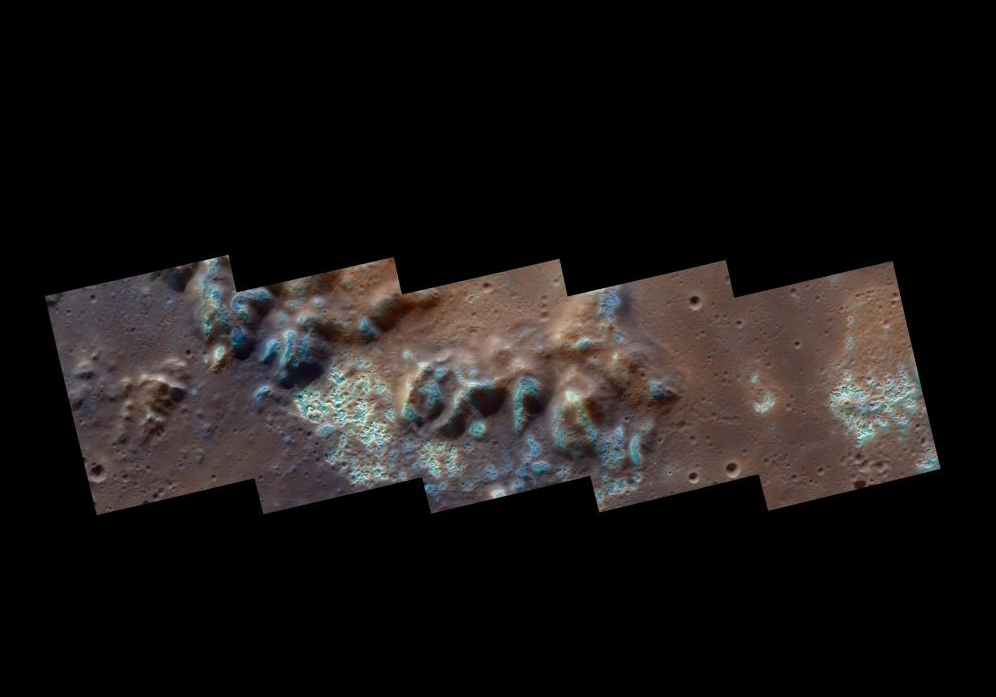
In a new shift in our understanding of Mercury’s geology, recent discoveries have unveiled the planet’s surface to be rich in volatile elements, challenging long-standing beliefs about its composition. Scientists have identified extensive volatile-rich layers (VRLs) beneath Mercury’s crust, potentially stretching several kilometers deep, contradicting the previously assumed volatile-devoid nature of the planet.
These revelations have come from detailed analyses of Mercury’s surface and subsurface, showing the presence of substances like halite, other semivolatile salts, and possibly organic volatiles. Such findings suggest that these VRLs might be widespread across the planet, hidden deep in certain regions but exposed in others through impact craters.
Particularly intriguing are the geomorphological features observed in the Raditladi basin and the northern polar chaotic terrains, which bear resemblance to glaciers on Earth and Mars. These features are believed to be the result of impact-exposed VRLs, offering a new perspective on Mercury’s geological history and composition.
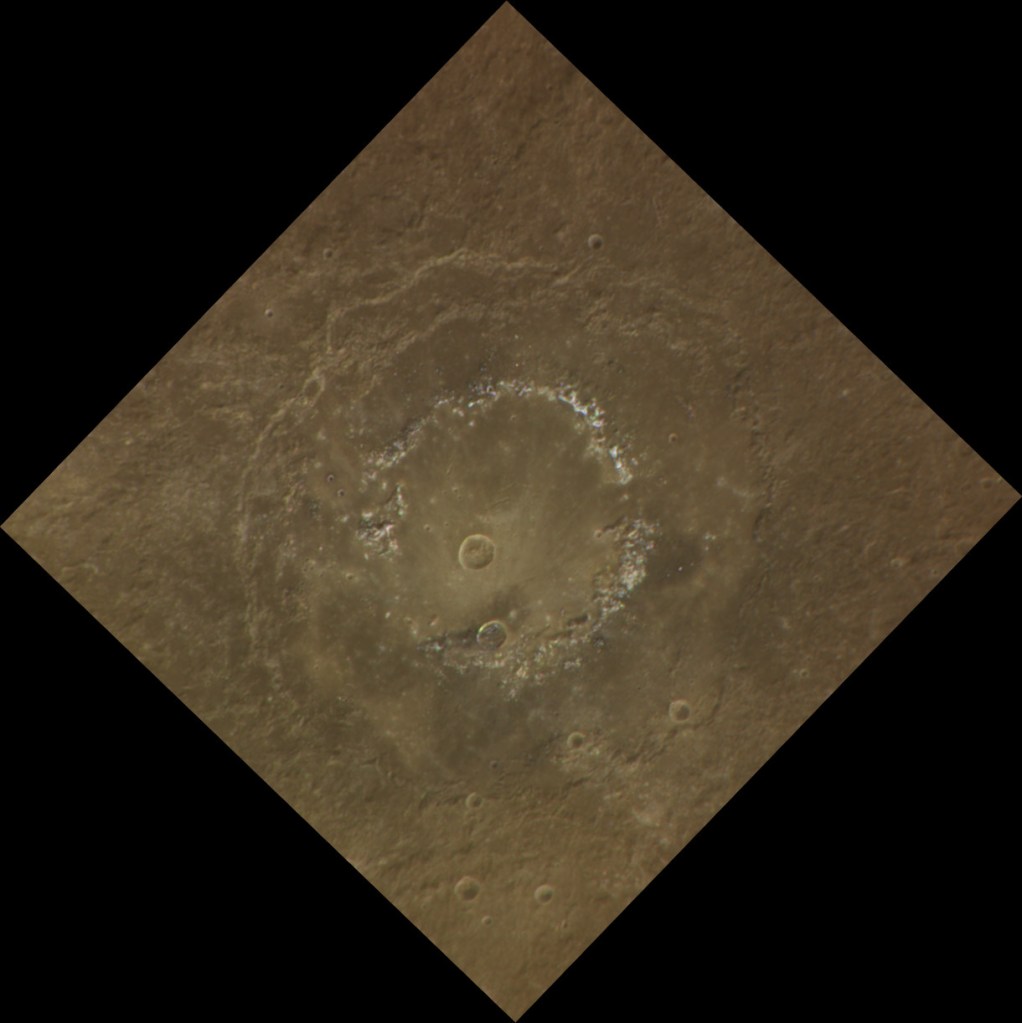
The research, incorporating data from the MESSENGER space probe, has identified high abundances of sulfur, chlorine, sodium, and potassium on Mercury’s surface. This volatile-rich surface contradicts earlier assumptions that Mercury’s proximity to the Sun and high surface temperatures would preclude the presence of such volatile compounds.
Moreover, the discovery of sublimation hollows, or depressions with bright interiors, across Mercury’s surface further supports the theory of a volatile-rich subsurface extending beyond the superficial layer previously detected. The analysis of chaotic terrains, showing significant elevation drops, suggests that these landscapes underwent disaggregation possibly due to the sublimation of VRLs over time.
This study’s findings, which also involve detailed geological mapping and the use of advanced imaging techniques, indicate a more complex geological history for Mercury than previously understood. It suggests that Mercury’s crust may have been enriched with volatiles before the Late Heavy Bombardment, with these materials accumulating planet-wide and being buried in regional expanses.
The implications of these discoveries are profound, suggesting that Mercury, once thought to be dry and barren, harbors a volatile-rich interior that shapes its surface and subsurface geology. This new understanding challenges the magma ocean differentiation concept for VRL formation, instead proposing a scenario where these layers were deposited possibly due to the collapse of a transient, hot primordial atmosphere.
As researchers continue to unravel the mysteries of Mercury’s geology, these findings not only enrich our knowledge of the closest planet to the Sun but also challenge our broader understanding of planetary formation and evolution across the solar system.
Source: Alexis, et al. “Mercury’s Hidden Past: Revealing a Volatiledominated Layer through Glacierlike Features and Chaotic Terrains.” The Planetary Science Journal, vol. 4, no. 11, 2023, p. 219, dx.doi.org/10.3847/PSJ/acf219, https://doi.org/10.3847/PSJ/acf219.
Featured Image: NASA/Johns Hopkins University Applied Physics Laboratory/Carnegie Institution of Washington


 ad*astra daily