
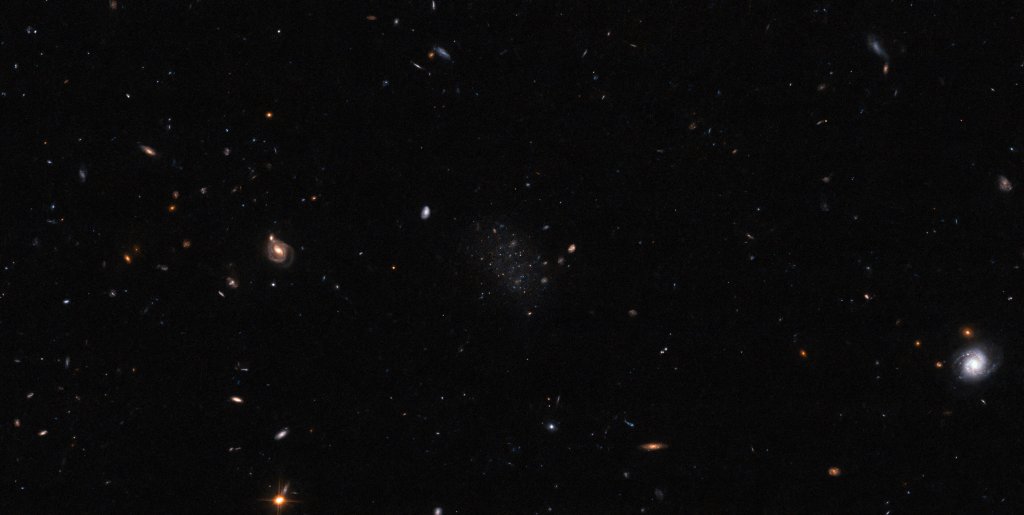
Recent astronomical research has sparked a discussion within the scientific community about the existence of extended stellar halos in ultrafaint dwarf galaxies. Notably, the outskirts of dwarf galaxies in the Local Group have unveiled stars that suggest the presence of these halos. This discovery is pivotal, considering the prevailing notion that such structures were predominantly associated with more massive galaxies like the Milky Way.
In a groundbreaking study, astronomers utilized RR Lyrae stars, identified from extensive surveys including Gaia DR3, the Dark Energy Survey, the Zwicky Transient Facility, and Pan-STARRS1, to probe the peripheries of 45 ultrafaint dwarf galaxies. RR Lyrae stars serve as key indicators due to their minimal foreground contamination, making them ideal tracers for such investigations. The research unveiled 120 RR Lyrae stars linked to 21 different galaxies, introducing seven new stars in six galaxies, and highlighting the expansive stellar populations in galaxies like Bootes I and Bootes III.
The findings are monumental, revealing that at least one-third of the 30 ultrafaint dwarfs with RR Lyrae populations host stars beyond four times their half-light radius, indicating significantly extended stellar regions. This revelation aligns with the ΛCDM model’s predictions and sheds light on the dynamics of galaxy formation and evolution, as these halos are believed to be the remnants of galaxy interactions and mergers.
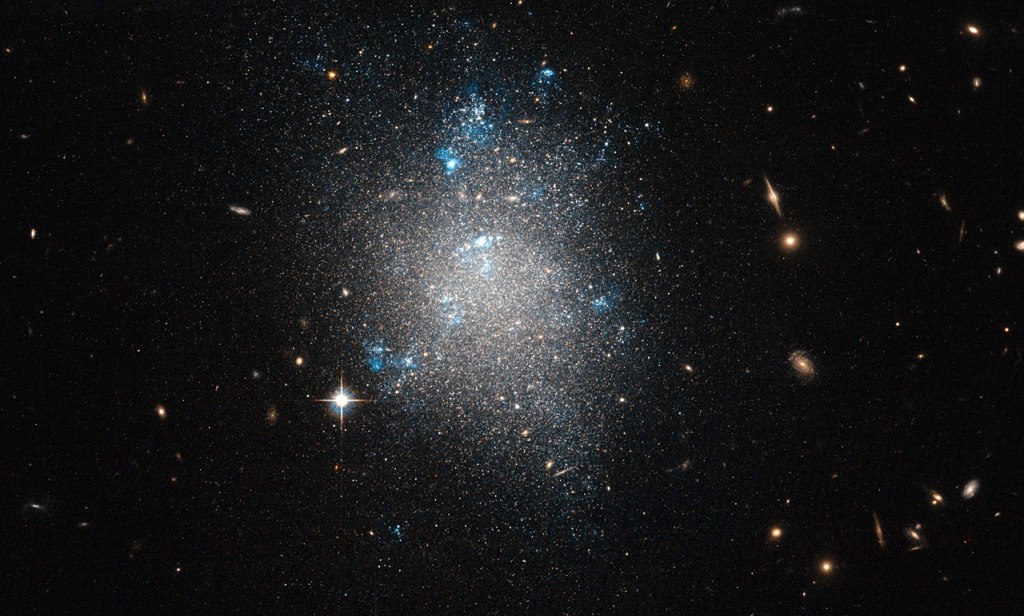
While the study of stellar halos in massive galaxies is well-established, the exploration of similar structures in dwarf galaxies has been challenging due to their faint nature and the complexities in modeling their mass distribution. However, recent advancements and discoveries are gradually uncovering the mysteries of these elusive structures. For instance, the dwarf galaxy M33 and six classical dwarf spheroidals have shown indications of extended stellar halos, some hosting RR Lyrae stars beyond their conventional boundaries.
The research also highlighted the unique role of ultrafaint dwarf galaxies in understanding stellar halos. Despite the observational challenges due to the sparse stellar populations in these galaxies, the use of RR Lyrae stars as tracers has proven effective. These stars, known for their consistent luminosity and variability, offer a reliable method to map the extended stellar components of these galaxies, providing invaluable insights into their structure and formation history.
This comprehensive study marks a significant stride in unraveling the complex structures of ultrafaint dwarf galaxies. By harnessing advanced observational techniques and extensive astronomical surveys, astronomers are not only demystifying the existence of stellar halos in these low-mass galaxies but also enhancing our understanding of the cosmic tapestry of galaxy formation and evolution.
Source: Tau, Elisa A, et al. “Extended Stellar Populations in Ultrafaint Dwarf Galaxies.” The Astronomical Journal, vol. 167, no. 2, 2024, p. 57, dx.doi.org/10.3847/15383881/ad1509, https://doi.org/10.3847/15383881/ad1509.
Featured Image: ESA/Hubble & NASA, B. Mutlu-Pakdil Acknowledgment G. Donatiello


 ad*astra daily