
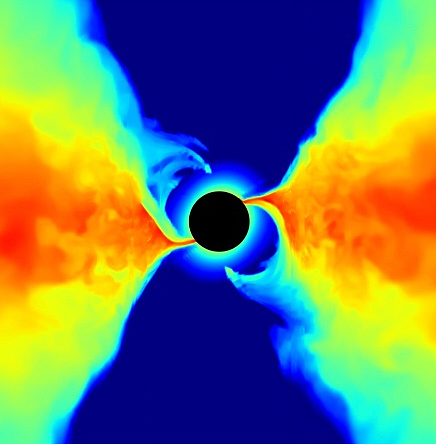
In a new study, astrophysicists have delved deep into the enigmatic realm of neutron stars and black holes in X-ray binaries, known for their powerful and focused jets during specific spectral states. Recent strides in computational astrophysics have allowed researchers to utilize numerical simulations, particularly three-dimensional general relativistic magnetohydrodynamic (GRMHD) models, to unravel the complexities behind jet formation and its characteristics.
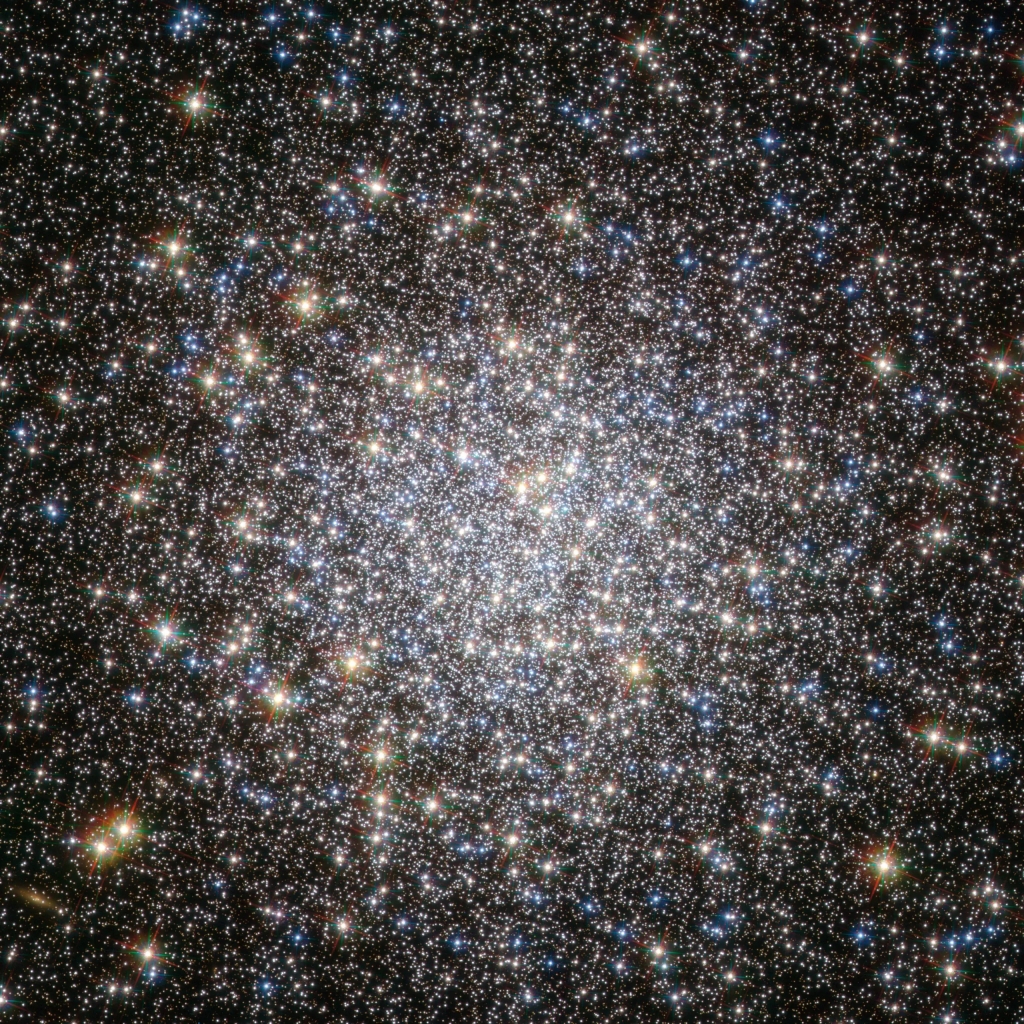
A neutron star is a celestial remnant, the incredibly dense core left behind after a massive star has ended its life in a supernova explosion. These stellar remnants are extraordinarily compact, with a mass comparable to that of our Sun but confined within a radius of only about 10 to 20 kilometers, leading to an immensely high density. In fact, the density of a neutron star is so great that a sugar-cube-sized amount of its material would weigh about a billion tons on Earth. Neutron stars are composed predominantly of neutrons, particles that result from the collapse of the core under gravity so intense that it forces protons and electrons to merge. The surface of a neutron star is smooth and solid, encasing a fluid core that might house exotic states of matter under extreme pressure. Neutron stars also exhibit strong gravitational and magnetic fields, with the latter sometimes being a trillion times stronger than Earth’s magnetic field. These fascinating objects often emit beams of electromagnetic radiation, and when these beams sweep past Earth, they are observed as pulses of radiation, leading to some neutron stars being identified as pulsars.
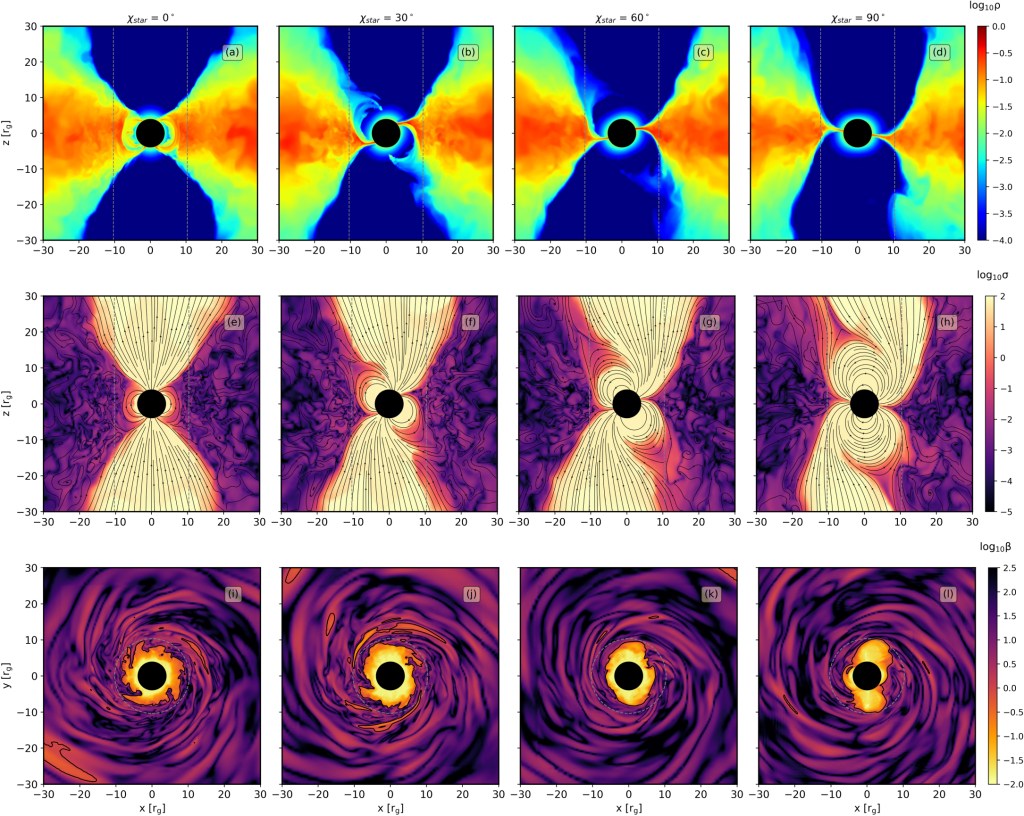
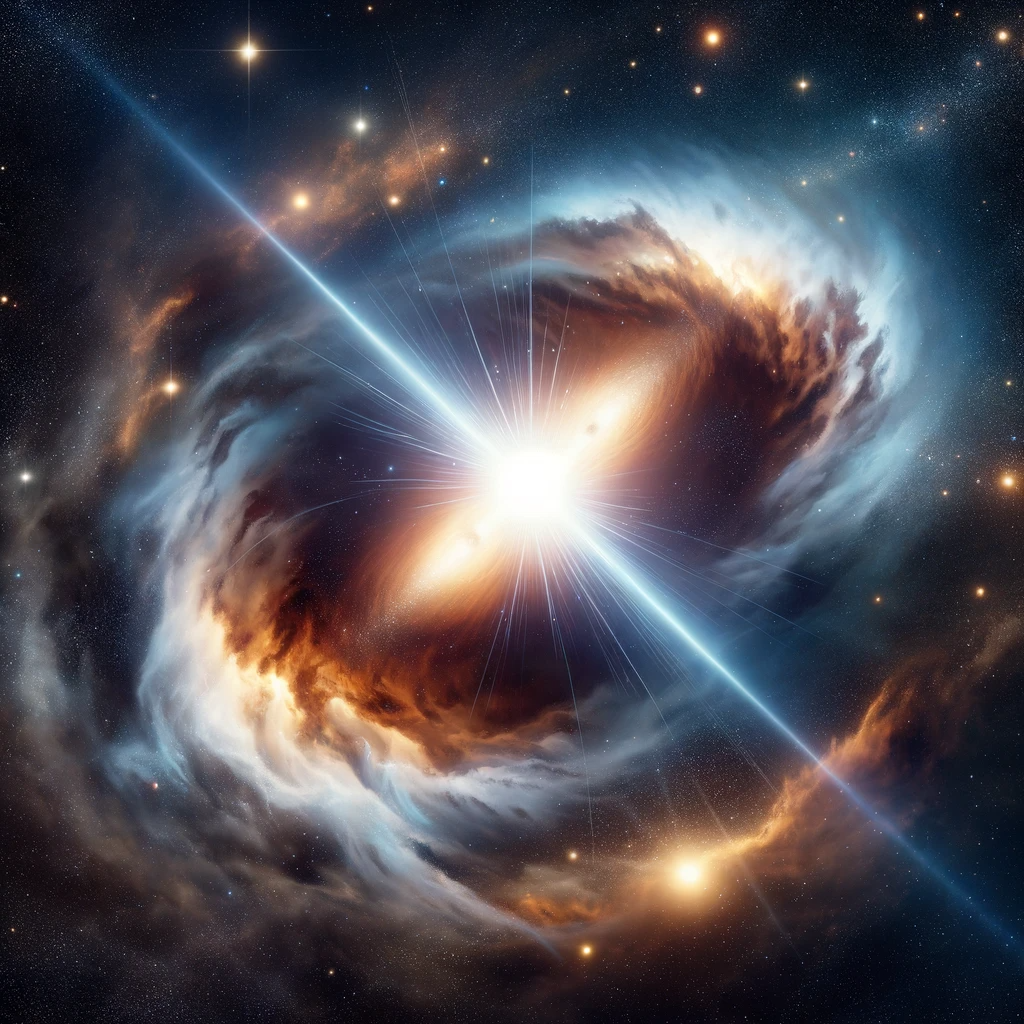
While significant progress has been made in understanding the jets emanating from black holes, neutron star jets have remained relatively uncharted. This study marks a pioneering effort to explore these enigmatic phenomena through 3D GRMHD simulations of accreting neutron stars, a first in the field. The simulations reveal that the jets are generated by the interaction between the magnetic field of the rotating star and the accretion disk, drawing parallels with the well-known Blandford–Znajek process.
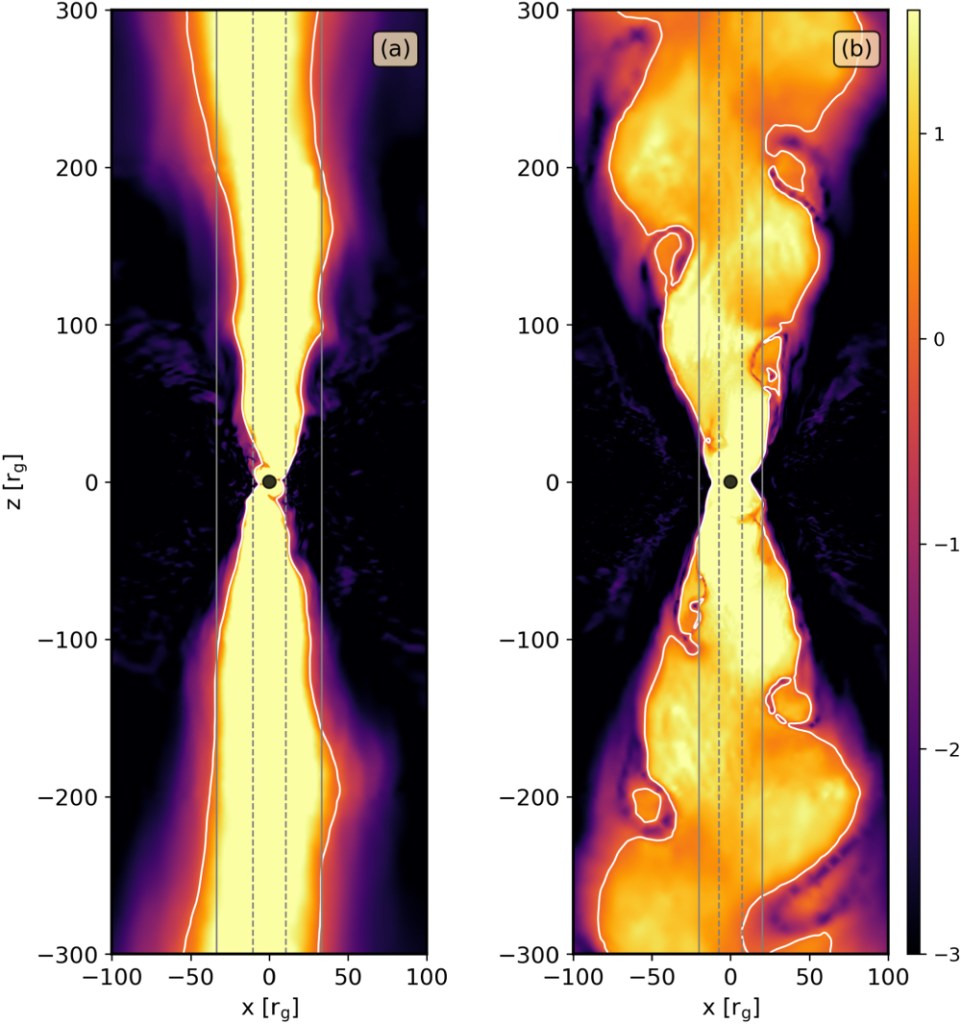
A critical finding from the research indicates the jet’s power is intricately tied to the magnetic field interaction between the star and its surrounding disk. Interestingly, the jet’s strength is found to be directly proportional to the open flux in the jet, denoted by Φjet. Additionally, the study highlights that the jet power diminishes as the stellar magnetic inclination increases, with a stark reduction by approximately 2.95 times in cases where the magnetosphere is orthogonal to the accretion disk.
In scenarios characterized by strong propeller effects and a highly oblique magnetosphere, the research unveils that the disk-induced collimation of open stellar flux leads to the formation of a striped jet, a feature preserving parts of the striped wind.
This study not only advances our understanding of jet dynamics in neutron star X-ray binaries (NSXRBs) but also sheds light on the broader spectrum of jet phenomena across various celestial objects. From young stellar entities to the supermassive black holes at the centers of galaxies, the mechanisms driving the outflows of material are a topic of profound interest and ongoing investigation.
The findings underscore the importance of the disk–jet coupling mechanism, a subject that remains under intense scrutiny due to the observed differences in jet properties between neutron stars and black holes. This research paves the way for future investigations, promising to unravel the intricate tapestry of cosmic jet formation and the enigmatic forces at play in the most extreme environments of our universe.
Source:
Das, Pushpita, and Oliver Porth. “Three-dimensional GRMHD Simulations of Neutron Star Jets.” The Astrophysical Journal Letters, vol. 960, no. 2, 2024, p. L12, dx.doi.org/10.3847/20418213/ad151f, https://doi.org/10.3847/20418213/ad151f.


 ad*astra daily