
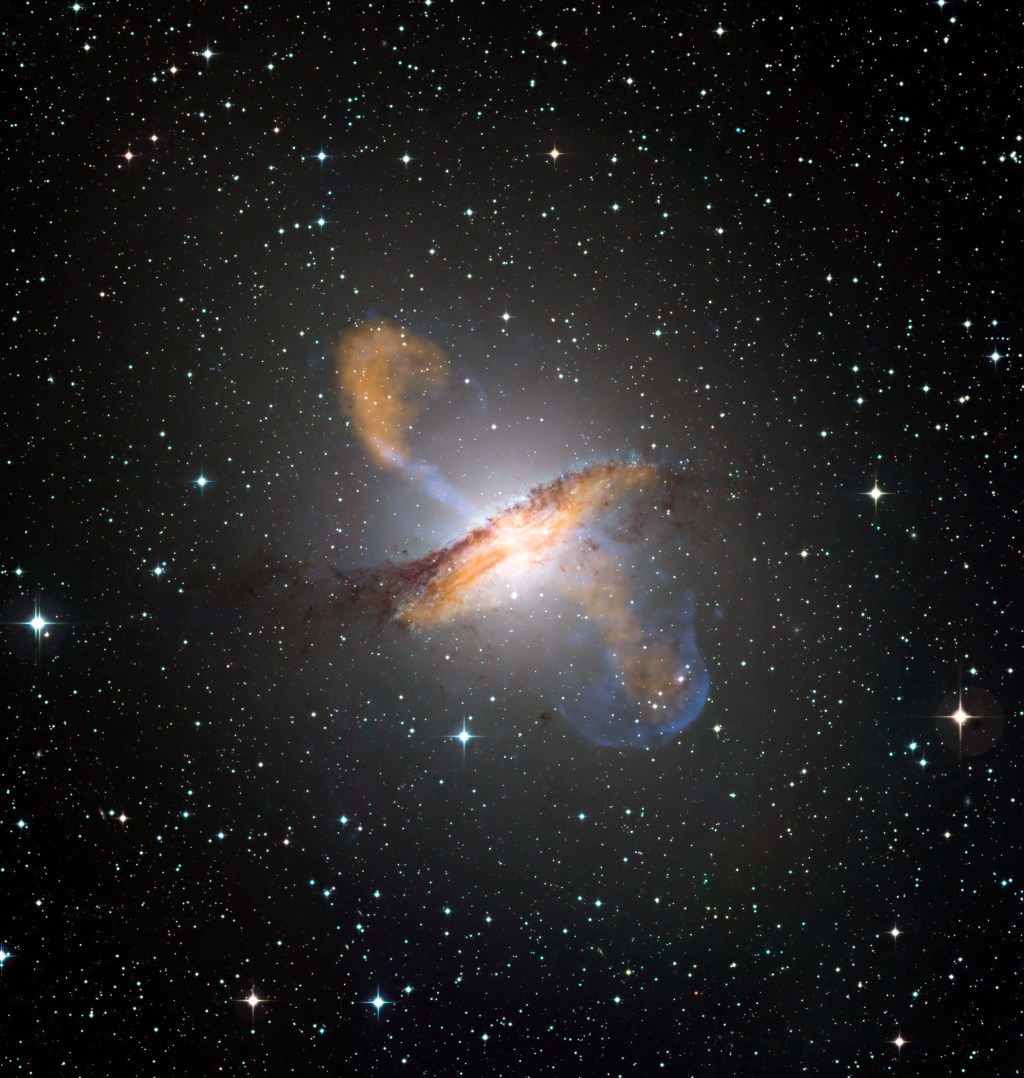
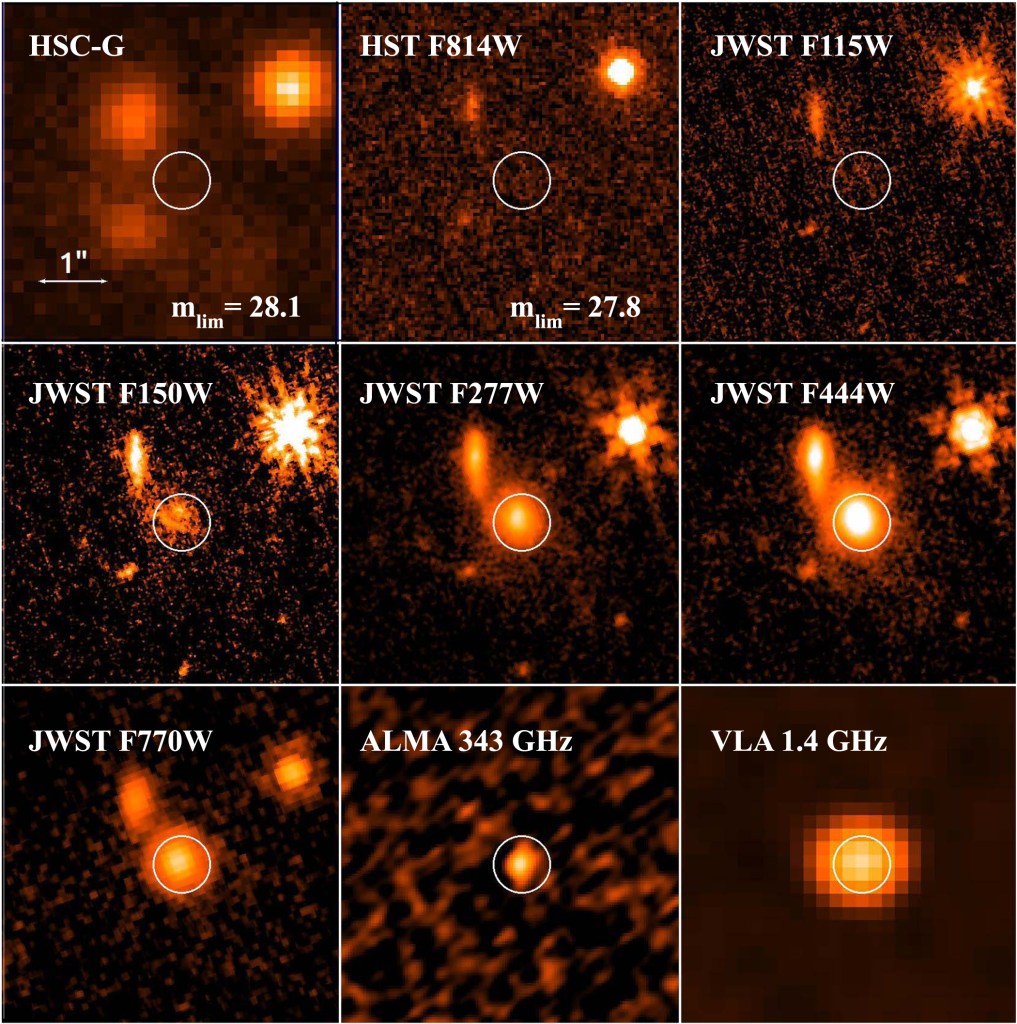
In a recent astronomical breakthrough, scientists have discovered an exceptionally obscured, radio-loud active galactic nucleus (AGN) candidate, marking the highest redshift observed in such a category. Utilizing the unparalleled capabilities of the James Webb Space Telescope (JWST) combined with multifrequency radio observations and mid-IR photometry, researchers have identified a massive supermassive black hole (SMBH) in its growth phase.
This remarkable finding was facilitated by data from the COSMOS-Web field, involving deep ground-based observations, ALMA, and additional space-based data. The AGN, heavily cloaked by its host galaxy, shows no signs of activity in UV/optical/near-infrared data, pointing towards extreme levels of obscuration.
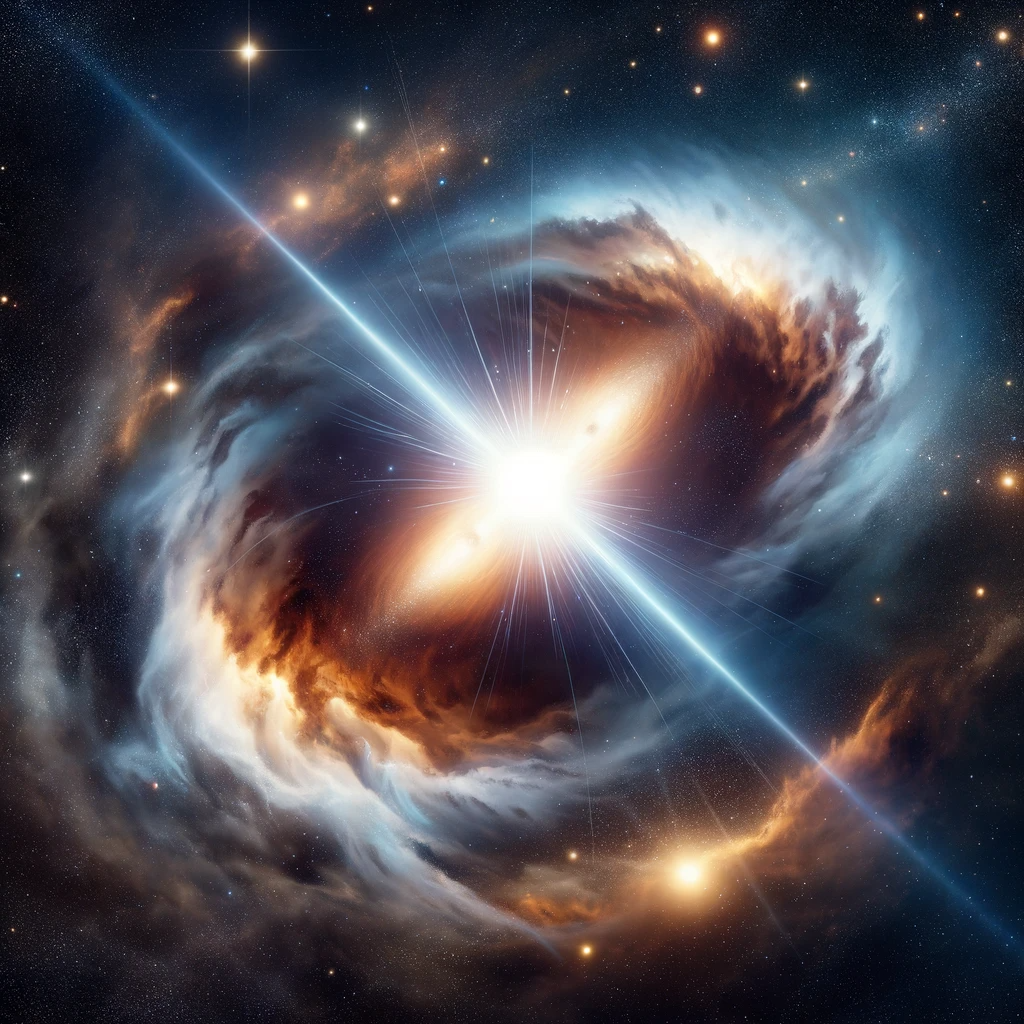
An Active Galactic Nucleus (AGN) is a compact region at the center of a galaxy that is extraordinarily luminous, often outshining all the stars in the host galaxy combined. This remarkable brightness is not due to stars but is instead generated by matter falling into a supermassive black hole at the galaxy’s core. Supermassive black holes at the heart of AGNs can have masses ranging from millions to billions of times that of the Sun.
The process of material spiraling into the black hole is known as accretion. As the matter is drawn in, it forms an accretion disk around the black hole. The intense gravitational forces heat this infalling material to extremely high temperatures, causing it to emit radiation across the electromagnetic spectrum, from radio waves to gamma rays.
AGNs play a significant role in the evolution of galaxies. The energy output from an AGN can influence the rate of star formation in the host galaxy, a process known as AGN feedback.
This recent discovery and subsequent study adds a significant chapter to the ongoing discussion about the formation and evolution of massive black holes in the early universe. Unlike most observed high-redshift AGNs that are not obscured, this particular AGN offers a rare peek into the properties of its host galaxy due to the significant attenuation of its AGN emission. The identification of this heavily obscured AGN is crucial, considering that a majority of AGNs at such high redshifts are predicted to be similarly concealed.
This finding challenges current understanding and stimulates questions about the mechanisms behind the rapid formation of these cosmic behemoths and the role of obscured AGNs in the broader cosmic tapestry. As the scientific community continues to probe the depths of the universe, revelations like this underscore the significance of advanced observation tools and highlight the ever-evolving nature of cosmic discovery.
Source:
Lambrides, Erini, et al. “Uncovering a Massive Z ∼ 7.7 Galaxy Hosting a Heavily Obscured Radioloud Active Galactic Nucleus Candidate in COSMOSWeb.” The Astrophysical Journal Letters, vol. 961, no. 1, 2024, p. L25, dx.doi.org/10.3847/20418213/ad11ee, https://doi.org/10.3847/20418213/ad11ee.
Featured Image:
ESO/WFI (Optical); MPIfR/ESO/APEX/A.Weiss et al. (Submillimetre); NASA/CXC/CfA/R.Kraft et al. (X-ray)

 ad*astra daily