
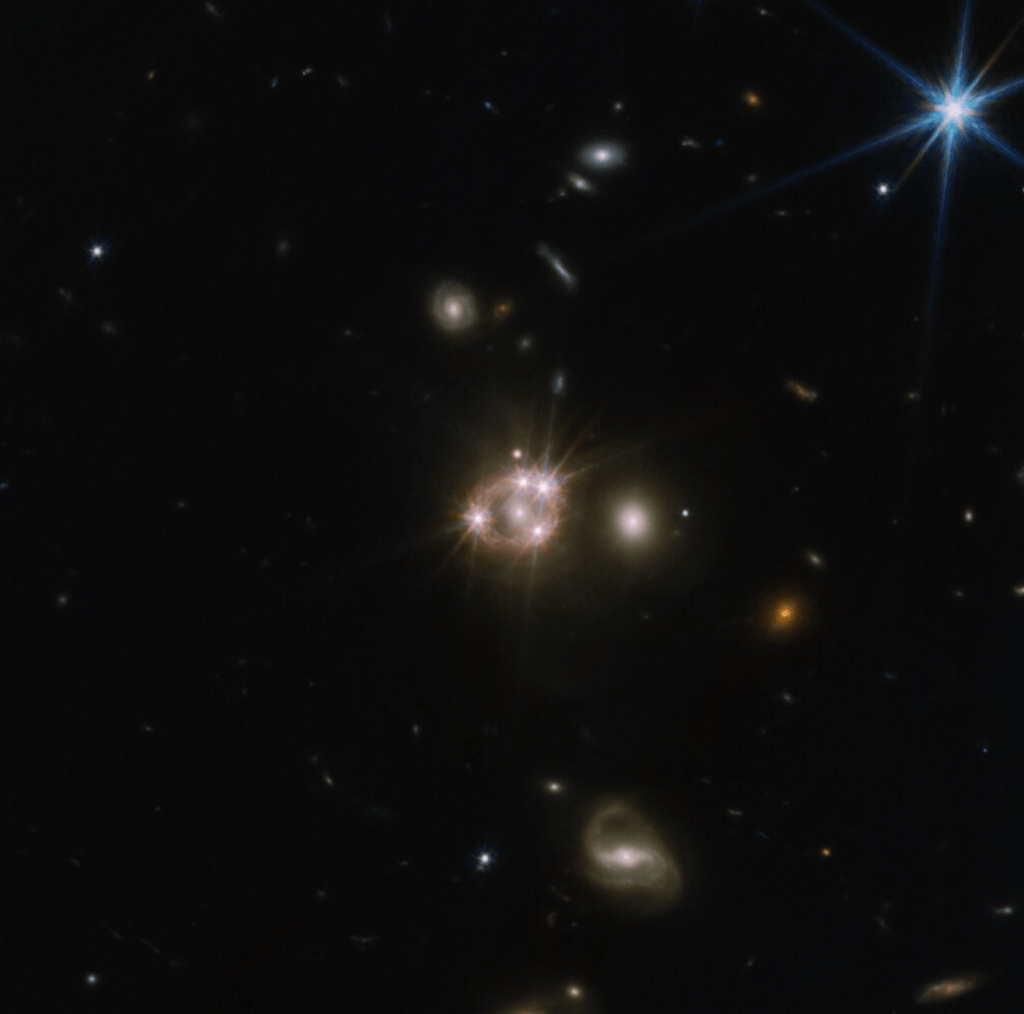
In a groundbreaking effort, scientists have leveraged the Dark Energy Spectroscopic Instrument (DESI) Legacy Imaging Surveys to hunt for strongly lensed quasars, a critical step in refining our measurement of the universe’s expansion rate, known as the Hubble constant (H0). This extensive search, a first of its kind within these surveys, scrutinized approximately 5 million objects, identifying 436 potential multiply lensed and binary quasar candidates.
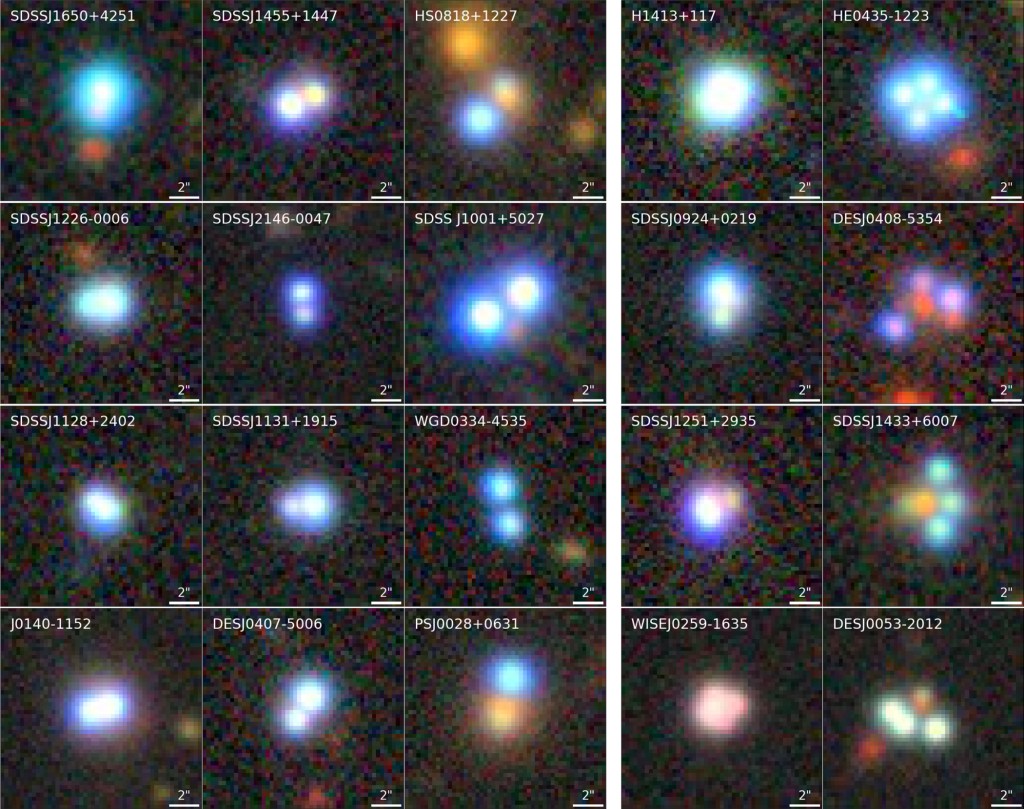
These findings hold immense significance for cosmology. Time delays between images of lensed quasars offer a unique method to calculate the Hubble constant independently. This is especially crucial given the ongoing discrepancy between H0 values derived from cosmic microwave background observations and direct measurements within our universe. With previous analyses of lensed quasars offering competitive precision, this larger and diverse new sample is expected to refine H0 measurements to unprecedented accuracy, addressing both statistical and systematic uncertainties.
Beyond the realm of cosmology, the discovery of more lensed quasars opens doors to advances in black hole physics and understanding the intricate relationship between supermassive black holes and their host galaxies. High-resolution imaging and analysis of these quasars and their galaxies provide a window into the early universe, a period otherwise challenging to observe.
The surge in identified lensed quasars, part of a larger trend fueled by large-scale surveys like SDSS, Kilo-Degree Survey, Dark Energy Survey, and others, not only enhances our understanding of the universe’s expansion but also enriches our knowledge of galaxy interactions, quasar activity, and the potential formation of binary black hole systems. This comprehensive effort marks a significant milestone in our quest to decode the universe’s most profound mysteries.
Source
Dawes, C, et al. “Finding Multiply Lensed and Binary Quasars in the DESI Legacy Imaging Surveys.” The Astrophysical Journal Supplement Series, vol. 269, no. 2, 2023, p. 61, dx.doi.org/10.3847/15384365/ad015a, https://doi.org/10.3847/15384365/ad015a.
Featured Image:
Quadruply Lensed Quasar WFI J2033-4723. JWSTS’s NIRCAM, NASA/STScI
 ad*astra daily