
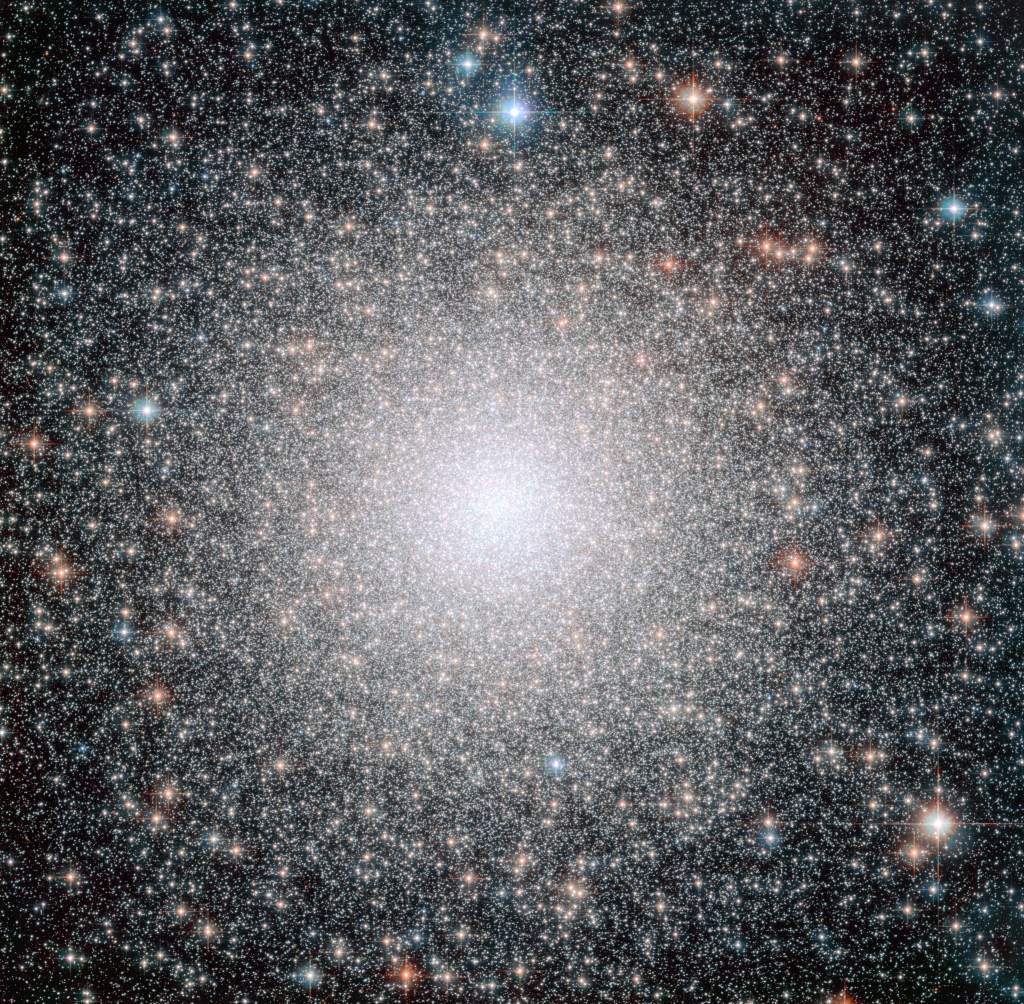
Globular clusters, some of the oldest and most intriguing objects in the cosmos, have captivated astronomers and space enthusiasts for centuries. These spherical collections of stars are not just spectacular to behold but are also crucial in deepening our understanding of galaxy evolution, dark matter, and the universe’s history.
Ancient Light
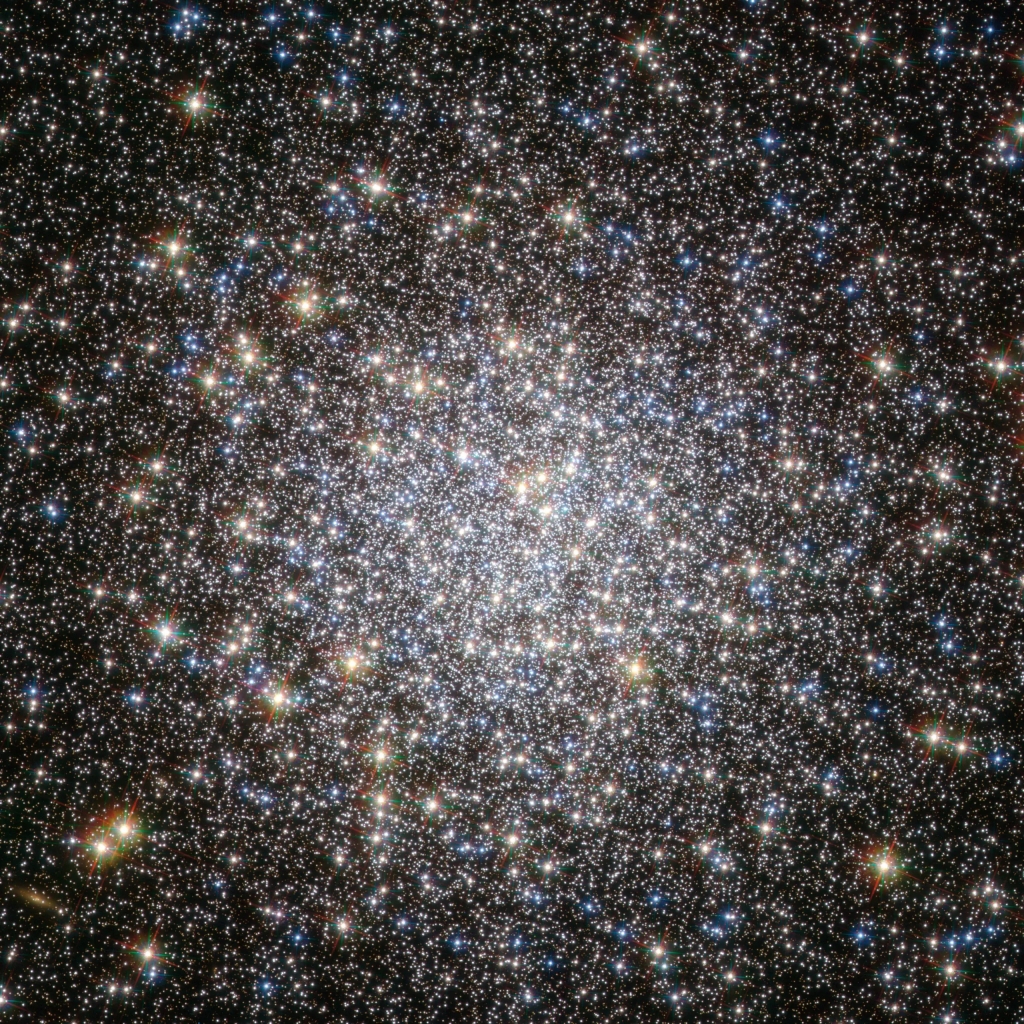
Globular clusters are densely packed, spherical collections of stars, which can range from tens of thousands to millions of stars, bound together by gravity. These stars are predominantly old, low-metallicity stars, suggesting that globular clusters are among the oldest surviving objects in the universe, with ages estimated to be close to the age of the universe itself – around 13 billion years. They are found in the halos of galaxies, including our own Milky Way, and are thought to have formed around the same time as their host galaxies.
A Swarm of Stars
Globular clusters are primarily found in the halos of galaxies, which are the spherical, outer regions of galaxies that extend beyond their main, visible structures. In our Milky Way, for example, more than 150 globular clusters have been identified, orbiting in the halo region. They are visible across great distances due to their densely packed stars, which give them a bright, distinct appearance even when observed from afar.
Astronomers observe globular clusters using both ground-based and space telescopes. They appear as bright, round blobs in the sky and can be seen with amateur telescopes, but detailed study requires more powerful equipment. The Hubble Space Telescope, for instance, has provided exquisite detailed images and deep insights into the nature of globular clusters, revealing the individual stars and their characteristics.
Witnesses to the Past
Globular clusters are fundamental to our understanding of galaxy evolution and the universe for several reasons. Firstly, their ages make them almost as old as the universe itself, providing astronomers with a window into the early stages of galaxy formation and evolution. By studying the ages, compositions, and distributions of globular clusters, astronomers can trace the history and development of their host galaxies.
Secondly, the dynamics of globular clusters, specifically how they move within their host galaxies, offer clues about the distribution of dark matter. Globular clusters’ motions are influenced by the gravitational pull of dark matter, which is an unseen and yet-to-be-directly-detected form of matter that makes up a significant portion of the universe’s total mass. By analyzing these motions, astronomers can infer the presence and distribution of dark matter in galaxies.
Finally, globular clusters play a key role in our understanding of stellar evolution and astrophysics. The dense environment of a globular cluster leads to interactions and mergers between stars, providing a laboratory for studying these rare processes. Additionally, the low metallicity of stars in globular clusters offers insights into the early universe’s chemical composition, before heavier elements were more abundant.
Globular clusters are not just visually stunning but are also rich in scientific value. Their study provides crucial insights into the early stages of the universe, the evolution of galaxies, the mysterious nature of dark matter, and the complex processes governing stellar evolution. As such, globular clusters remain a key focus in the quest to unravel the mysteries of the cosmos.
 ad*astra daily