
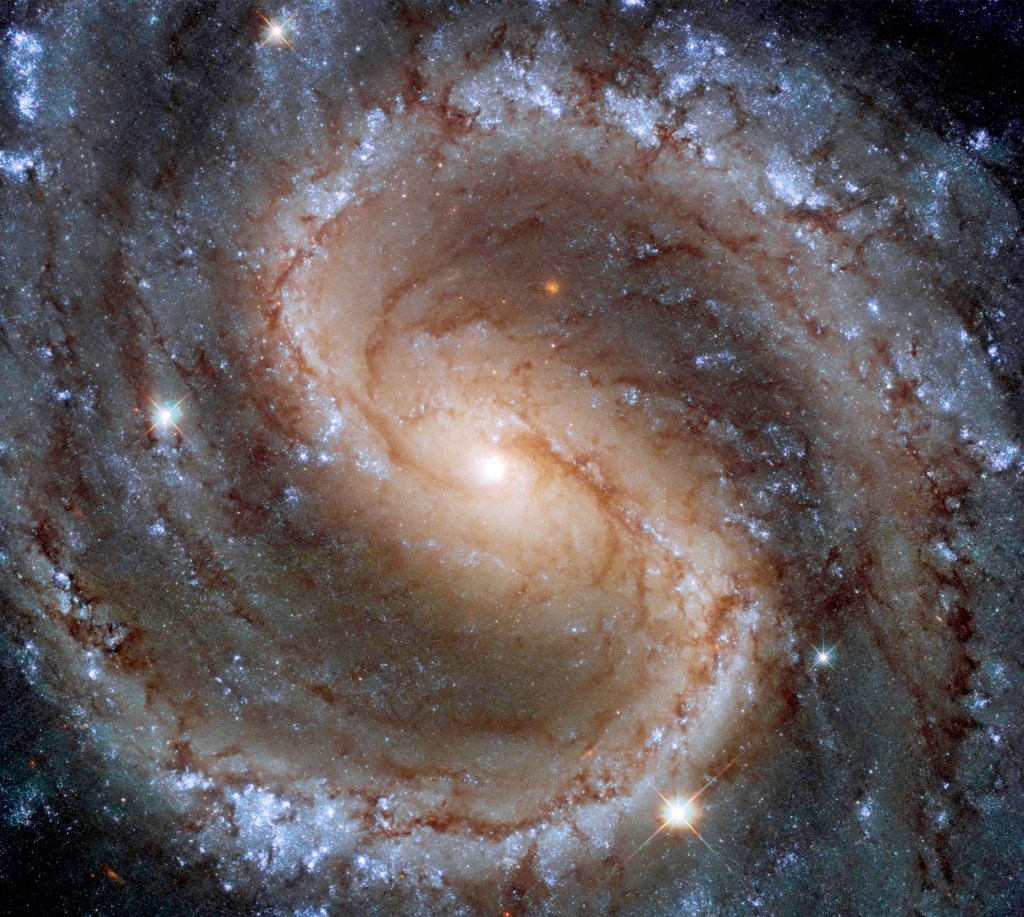
Barred spiral galaxies represent a fascinating and significant category of galaxies within the universe. Their distinct structure and the role they play in the cosmic landscape offer crucial insights into the processes of galaxy formation and evolution.
What are Barred Spiral Galaxies?
A barred spiral galaxy is a type of spiral galaxy characterized by a central bar-shaped structure composed of stars. This bar extends from the nucleus outwards into the disk of the galaxy. Edwin Hubble first classified these galaxies in his Hubble sequence, which organizes galaxies based on their appearance. In this sequence, barred spiral galaxies are designated as “SB,” followed by a lowercase letter (a, b, or c) indicating the tightness of the spiral arms and the size of the central bulge.
These galaxies differ from normal spiral galaxies (classified as “S”) due to the presence of the central bar. The bar is believed to play a significant role in the dynamics of the galaxy, influencing the motion of stars and gas and affecting star formation processes.
Where Are They Located and How Do We See Them?
Barred spiral galaxies are scattered throughout the universe, often found in regions with a high density of galaxies, such as galaxy clusters and groups. However, they can also exist in more isolated areas. Our own Milky Way galaxy is a classic example of a barred spiral galaxy, though this was only confirmed in the latter half of the 20th century due to our position within its disk, which makes direct observation challenging.
Observing these galaxies depends significantly on our vantage point. From a face-on perspective, the bar and spiral arms are clearly visible, allowing astronomers to study their structure and composition. However, when viewed edge-on, the bar can be difficult to detect, and the galaxy may appear as a typical spiral galaxy.
Advancements in telescopic technology, particularly in the infrared spectrum, have enhanced our ability to observe these galaxies. Infrared observations allow astronomers to see through dust that can obscure the bar and spiral arms in visible light, providing a clearer picture of their true structure.
Why are They Important to Understanding Galaxy Evolution?
Barred spiral galaxies are pivotal in our understanding of galactic dynamics and evolution. The central bar is thought to act as a mechanism for radial redistribution of matter in the galaxy. It can channel gas from the outer parts of the galaxy towards the center, potentially fueling active galactic nuclei and triggering star formation in the central regions. This process is a crucial aspect of the secular evolution of galaxies, a theory that emphasizes the gradual rearrangement of energy and mass within galaxies over time.
Studying these galaxies also helps astronomers understand the role of galactic structure in star formation and the evolution of galactic cores. The presence of a bar can significantly alter the orbits of stars and gas clouds, leading to unique patterns of star formation and possibly influencing the growth of supermassive black holes at the centers of galaxies.
Also, barred spiral galaxies provide a window into the past conditions of the universe. By examining galaxies at various stages of evolution, astronomers can piece together the history of galaxy formation and evolution. This contributes to a broader understanding of the universe’s history and the processes that have shaped it.
Barred spiral galaxies are not just visually striking but are also crucial to our comprehension of the intricate processes governing galaxy formation and evolution. Their unique structures offer a valuable perspective on the dynamics of galaxies and play a pivotal role in our ongoing quest to unravel the mysteries of the universe.


 ad*astra daily